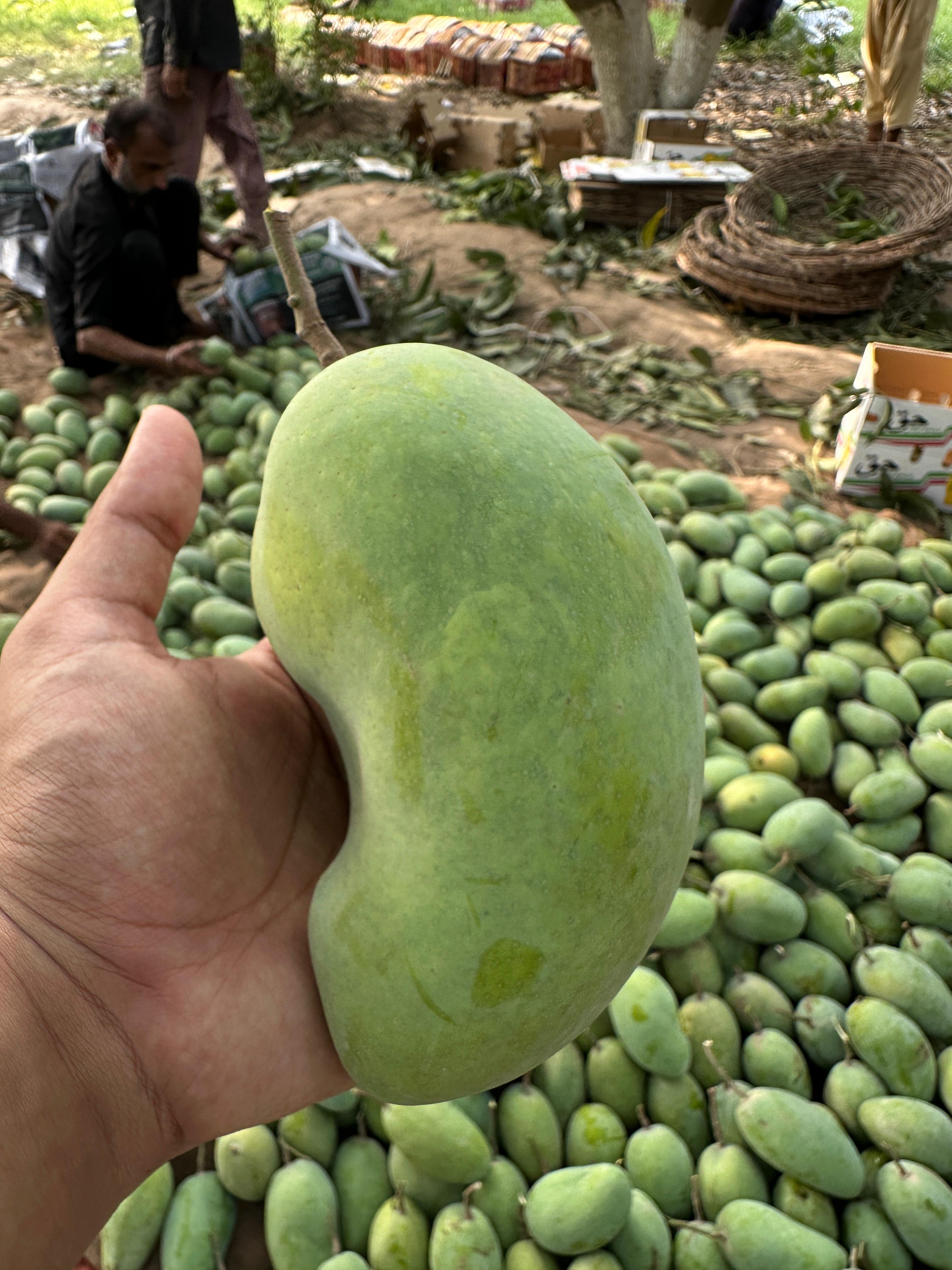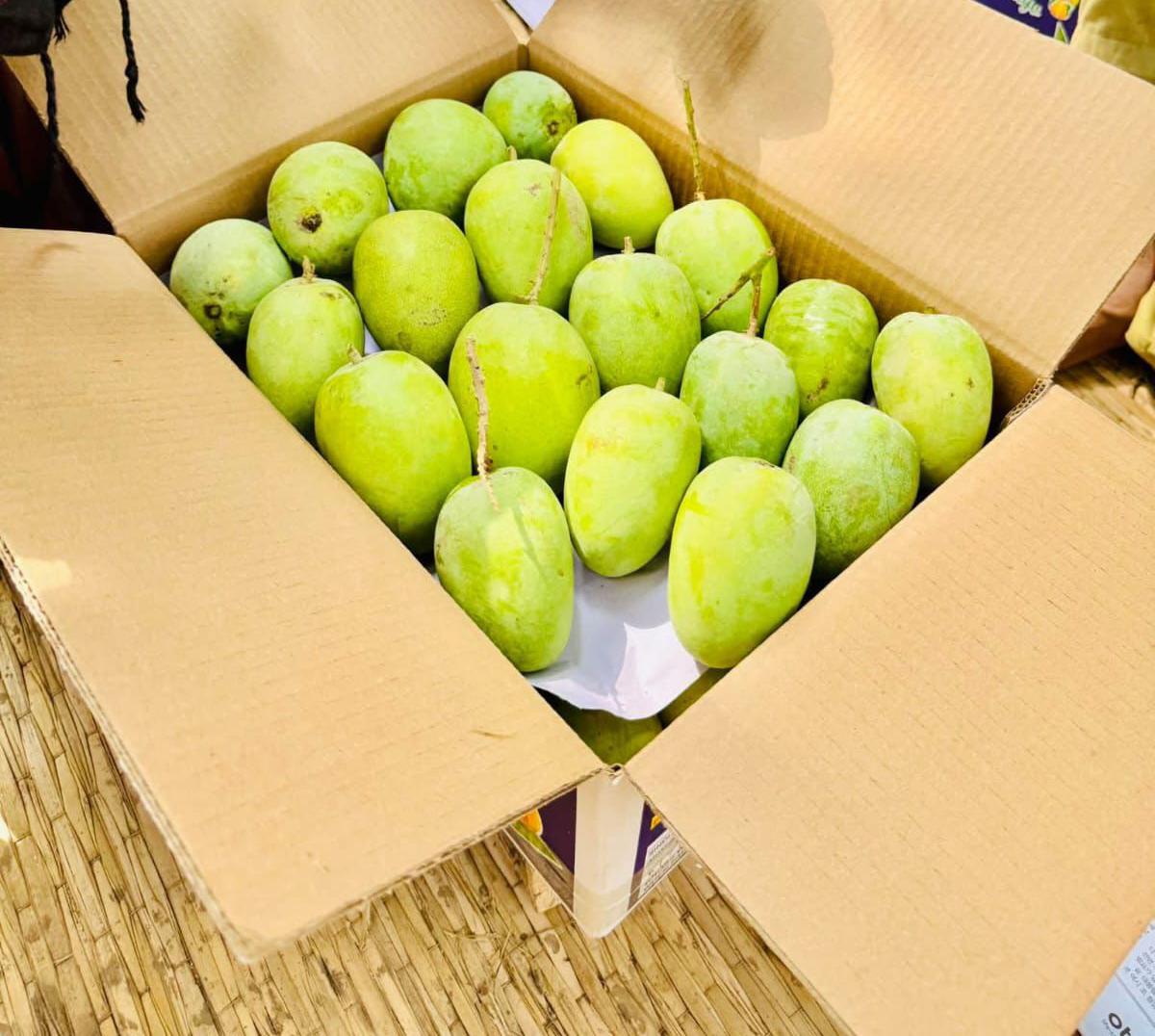
How To Tell A Good Mango — Buying Guide From A Family Farm
A mango grower's checklist for picking a great mango — what to look for in colour, smell, weight, firmness and origin.
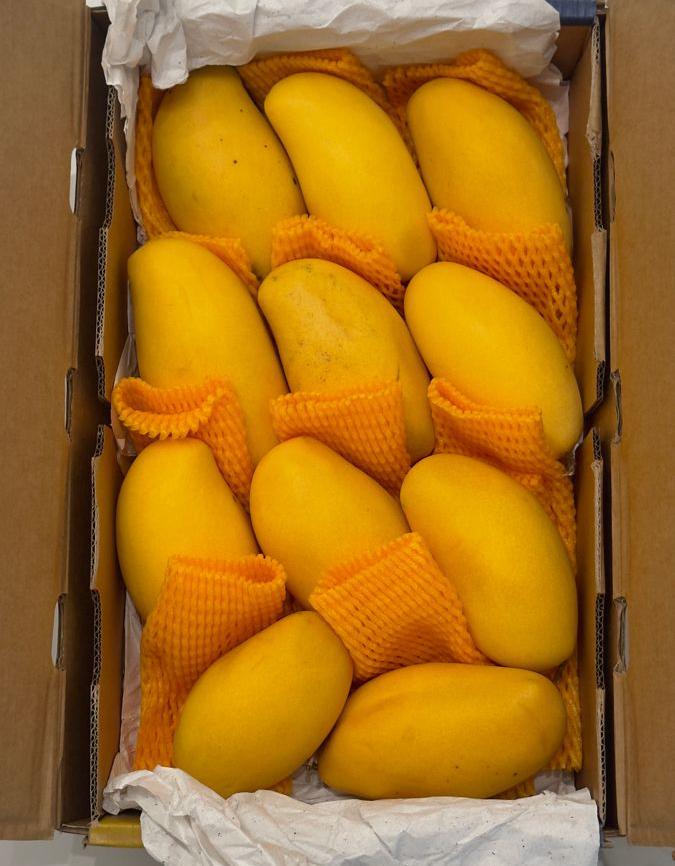
Use your nose first
Aroma is the single best signal. A great mango smells distinctly sweet at the stem-end — floral, fruity, unmistakable. No smell means underripe; sharp fermented smell means overripe.
Colour is a poor proxy. A green-shouldered Chaunsa can be perfectly ripe while a fully yellow Sindhri can still be a day away.
Then your thumb
Press gently near the stem with your thumb. The flesh should yield a millimetre or two — like a ripe avocado. Hard means wait; mushy means too late.
Soft spots, deep wrinkles or weeping skin are a no.
Heft it
Pick the mango up. A good mango feels heavy for its size — that's juice, not air. Lightweight fruit is often dry, fibrous or harvested too early.
Look at the skin
Tiny dark freckles ('sugar spots') are a positive sign in some varieties — they signal high sugar content. Large black bruises are not.
Skin should be taut, not shrivelled. A waxy bloom is natural in some varieties and brushes off easily.
Ask about the origin
Premium mangoes are a regional product. The best Sindhri comes from southern Punjab and northern Sindh; the best Anwar Ratool and Chaunsa from the Multan region. Mangoes that have travelled through multiple middlemen lose freshness with every step.
Farm-direct boxes — picked, graded and shipped from a single orchard — solve this. That is the standard we hold ourselves to.